
Fish White Spot
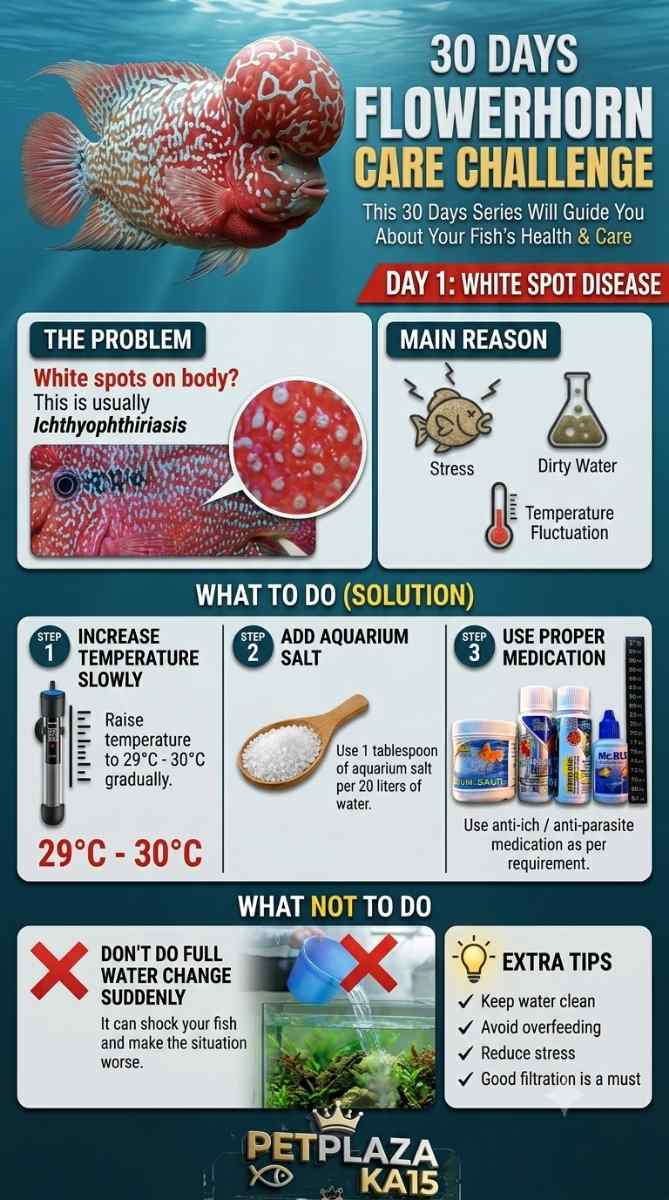
Identifying White Spot (Ich)
Appearance: The spots look like grains of salt or sugar scattered over the body, fins, and gills.
Behavior: Fish often "flash" or scrape their bodies against tank decorations or the substrate because they are itchy. They may also appear lethargic or have clamped fins.
Cause: It is typically triggered by stress, which weakens the fish's immune system. Common stressors include poor water quality (ammonia/nitrite spikes), temperature fluctuations, or the introduction of new fish/equipment without proper quarantine.
Immediate Steps for Treatment
If you suspect Ich, acting quickly is vital to prevent the spread to other fish.
Test Water Quality: Check your ammonia, nitrite, nitrate, and pH levels. Poor water quality is often the root cause.
Isolate: If possible, move the infected fish to a separate "hospital" or quarantine tank to protect your main display.
Increase Temperature: Slowly raise the water temperature to 28°C–30°C. This accelerates the life cycle of the parasite, making it more vulnerable to medication. (Ensure your Flowerhorn can handle this temperature and provide extra aeration, as warmer water holds less oxygen).
Use Medication: Use a dedicated anti-Ich/White Spot medication (often containing chemicals like formalin or malachite green).
Crucial: Remove any activated carbon from your filter during treatment, as it will absorb and neutralize the medication.
Water Maintenance: Perform regular, partial water changes to keep the environment clean, but ensure any new water is properly dechlorinated and temperature-matched to prevent further stress.
Other Possibilities
While Ich is the most common cause of "white spots," it can sometimes be confused with other issues:
Hole-in-the-Head (HITH) / Hexamita: Often presents as small white pimples, holes, or craters, particularly on the head region, often accompanied by white, stringy feces. This is typically treated with Metronidazole and improved water quality.
Epistylis: These spots can look similar to Ich but often appear more translucent, raised, or patchy.
Fungal/Bacterial Infections: These may appear as white, fuzzy patches rather than distinct, grain-like spots.
Note: As you are managing the health of your stock for Pet Plaza KA15, ensure that all newly imported or acquired fish are kept in a separate quarantine tank for at least 2–3 weeks before introducing them to your primary tanks to prevent these parasites from entering your healthy stock.
